
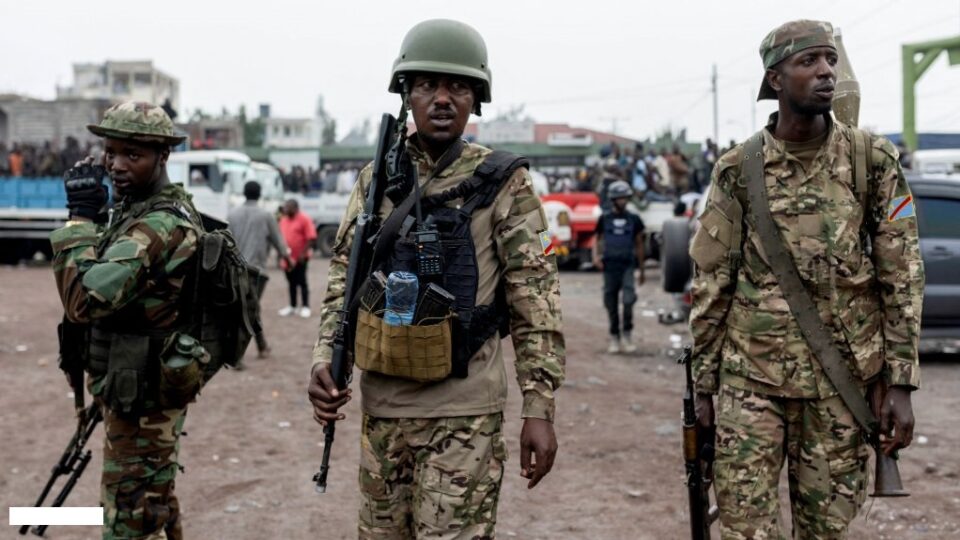
KINSHASA, Xinhua, March 1 — Late Friday, government spokesman Patrick Muyaya announced that 16 people had been killed in two explosions in Bukavu, in the eastern Democratic Republic of the Congo (DRC).
Shortly after a political rally in favor of the M23 rebels, there were explosions Thursday in the center of Bukavu. M23 and the government both claimed responsibility for the explosions.
The provincial capitals of South Kivu and North Kivu, Bukavu and Goma, are among the areas in the eastern Democratic Republic of Congo that M23 claims control over. Following the creation of a parallel government in North Kivu in mid-February, M23 appointed a “governor” of South Kivu on Friday.
Long-standing ethnic tensions and the aftermath of the 1994 Rwandan genocide are major factors in the current conflict between M23 and the DRC government.
Rwanda asserts that the DRC army has formed an alliance with the Democratic Forces for the Liberation of Rwanda, a rebel organization suspected of taking part in the genocide against Tutsis, while the DRC accuses Rwanda of backing M23.
A growing humanitarian crisis and widespread population displacement are the results of the conflict. Despite military and diplomatic attempts to put an end to the fighting, tensions are still high.
For unclear reasons, a meeting of foreign ministers from the East African Community (EAC) and the Southern African Development Community (SADC) that was originally planned for Friday in Harare, Zimbabwe, did not happen.
The most recent peace mechanism to address the Great Lakes crisis was the joint SADC-EAC summit that took place three weeks ago in Dar es Salaam, Tanzania.
