
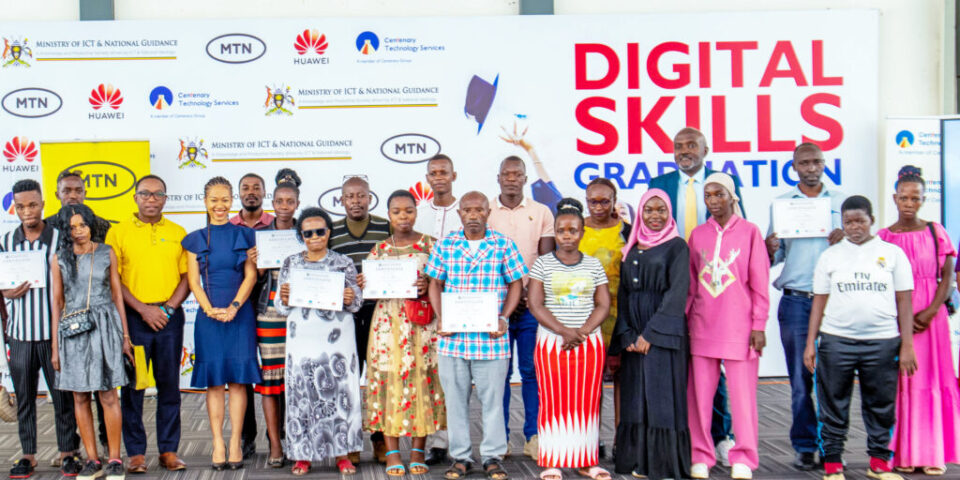
Vendors at Kampala Market Adopt ICT and Complete the Digital Skills Program
In an effort to incorporate technology into Uganda’s traditional marketplaces, 851 market vendors from various Kampala markets have completed a digital skills training program.
The program has given vendors the necessary ICT skills to improve their businesses and is revolutionizing market operations.
The National ICT Innovation Hub, the Ministry of ICT and National Guidance, and private sector partners, such as Huawei Uganda and the MTN Uganda Foundation, collaborate on the Digital Skilling Program.
Kamwokya Community Center, Kamwokya Market, Kamwokya Mosque, Kitintale Market, Port Bell Market, and Usafi Market were among the markets where the program provided training to vendors.
358 (42%) of the 851 graduates are female, and 493 (58%) are male.
It is anticipated that market vendors will use technology as part of this initiative to increase productivity, reach a wider audience, and improve financial transactions in their day-to-day operations.
Jane Nakitto, 57, sets up vibrant textiles in her tiny stall at the busy Port Bell Market outside of Kampala. However, in contrast to two months ago, she now takes a moment to check her phone before accepting payment via mobile money and promptly logs the sale in a basic inventory app.
I used to lose track of what sold the best. My phone tells me now,” she remarked.
“When I showed my kids that I could do this, they were shocked,” she continued.
Today, 851 market vendors, including Nakitto, received their diplomas from the digital skills program.
In order to integrate Uganda’s informal sector into the digital economy, it is imperative that Kampala market vendors receive digital skills training. Market operations have historically relied on in-person negotiations and cash transactions.
Due to nationwide lockdowns that forced businesses to move online, the COVID-19 pandemic outbreak highlighted the necessity of digital adaptation. The necessity of reaching customers online was embraced by many vendors, underscoring the critical advantages of digital literacy.
According to Dr. Aminah Zawedde, Permanent Secretary for the Ministry of ICT and National Guidance, the program is a prime example of Uganda’s digital vision.
“Our Digital Transformation Roadmap is being put into practice with this digital skilling initiative. The use of digital tools by market vendors to boost their earnings is an example of the digital transformation that affects regular Ugandans. The government’s commitment to ICT as a catalyst for national development is directly aligned with this initiative,” she said.
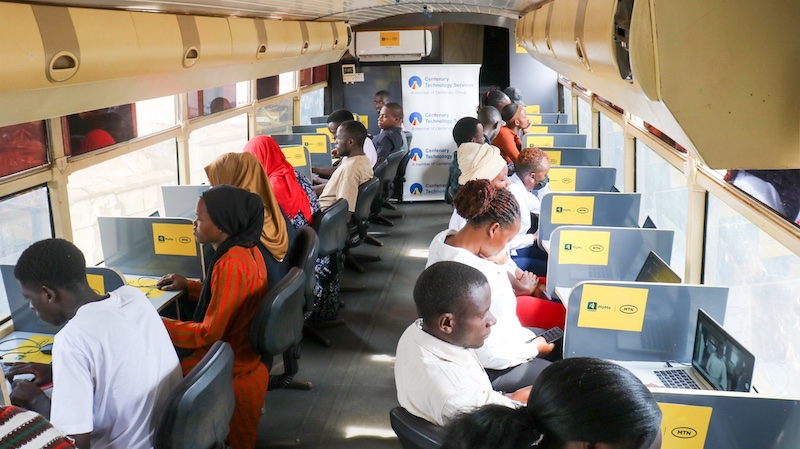
“The MTN ACE program has always been about meeting people where they are in their digital journey,” stated Bryan Mbasa, Senior Manager of the MTN Uganda Foundation. We saw enormous potential with these market vendors just waiting to be realized. Our digital buses serve as links between digital opportunity and conventional commerce. In the morning, a vendor learns about digital finance, and by the afternoon, they are utilizing it with clients. We are committed to spreading this model throughout Uganda because of its immediate relevance, which also explains why we are seeing such high adoption rates.
Robert Okello, 42, has been selling produce at Kamwokya Market for more than 20 years. He now uses WhatsApp to manage his supplier relationships and a basic spreadsheet to keep track of his daily earnings.
You believe that technology is only for young people my age. Instead of calling each supplier individually, I now send price requests to five at once. “I find better prices and save time,” he said.
This program’s approach to accessibility is what sets it apart. MTN and Huawei’s digital buses, which are contemporary classrooms on wheels with computers, internet access, and interactive screens, park right at the markets instead of requiring busy market vendors to travel to training facilities.
Vendors learn everything from digital financial services and online marketing to the fundamentals of smartphones inside these mobile digital hubs. Every skill is customized to meet their unique business needs.
Esther Namuganza, a 26-year-old single mother who sells handcrafted baskets, says the training has changed the scope of her business.
Within two weeks of training, 78% of graduates use at least one digital tool in their business, according to the program’s organizers, who also noted that participants’ use of digital payments has grown by 23%.
At Centenary Technology Services, General Manager of Product Development Steven Kirenga stated, “What we’re seeing is technology democratization in its purest form.”
“We created this program to change mindsets as well as impart skills. Digital inclusion becomes significant when a market vendor understands that they can use the same technology as a corporate executive to address their unique business challenges. Our strategy aims to make sophisticated technology understandable without undermining its potential.
The program shows a step toward the Digital Uganda Vision 2040 and a tangible implementation of Uganda’s Digital Transformation Roadmap.
