

The second-term president probably will try to remove spending that legislators have proactively appropriated, setting off a sacred battle inside the branches. If fruitful, he could employ the ability to rebuff apparent enemies.
Donald Trump is entering his second term with commitments to cut an immense range of taxpayer driven organizations and an extreme intend to do as such. As opposed to depending on his party’s control of Congress to manage
We can essentially interfere with the cash,” Trump said in a 2023 mission video. “For a considerable length of time under our arrangement of government, it was undisputed that the president had the sacred ability to stop superfluous spending.”
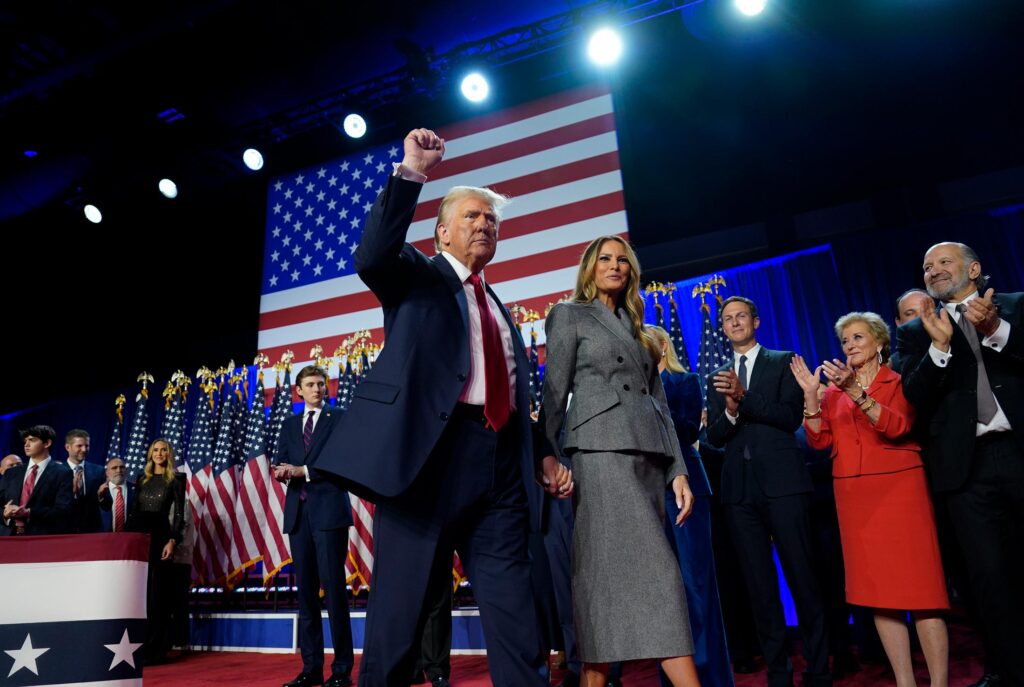
His arrangement, known as “impoundment,” takes steps to incite a significant conflict over the constraints of the president’s command over the financial plan. The Constitution gives Congress the sole position to proper the government spending plan, while the job of the presidential branch is to give out the cash successfully. Yet, Trump and his counsels are stating that a president can singularly overlook Congress’ spending choices and “seize” reserves assuming he goes against them or considers them inefficient.
Trump’s plans on the financial plan are essential for his organization’s bigger arrangement to combine however much power in the presidential branch as could reasonably be expected. This month, he constrained the Senate to go into break so he could choose his bureau with next to no oversight. (Up until this point, conservatives who control the chamber have not consented to do as such.) His key counsels have illuminated plans to bring free organizations, like the Division of Equity, under political control.
If Trump somehow managed to state an ability to eliminate legislatively supported programs, it would without a doubt tee up a battle in the government courts and Congress and, specialists say, could on a very basic level change Congress’ bedrock power.
“It’s a work to wrest the whole financial sway away from Congress, and that is simply not the sacred plan,” said Eloise Pasachoff, a Georgetown Regulation teacher who has expounded on the government financial plan and appointments process. “The president doesn’t have the power to go into the financial plan little by little and take out the stuff he could do without.”
Trump’s case to have impoundment influence negates a Nixon-period regulation that restricts presidents from impeding spending over strategy conflicts as well as a line of government court decisions that keep presidents from declining to burn through cash except if Congress awards them the adaptability.
In a commentary distributed Wednesday, tech very rich person Elon Musk and previous conservative official applicant Vivek Ramaswamy, who are supervising the recently made, nongovernmental Division of Government Productivity, composed that they wanted to slice administrative spending and fire government workers. A portion of their endeavors could offer Trump his most memorable High Court trial of the post-Watergate Legislative Financial plan and Impoundment Control Demonstration of 1974, which requires the president to spend the cash Congress endorses. The law permits special cases, for example, when the presidential branch can accomplish Congress’ objectives by spending less, however not as a method for the president to eliminate programs he goes against.
Trump and his helpers have been transmitting his arrangements for a threatening takeover of the planning system for a really long time. Trump has discredited the 1974 regulation as “not an excellent demonstration” in his mission video and expressed, “Bringing back impoundment will give us a urgent device with which to destroy the Secret government.”
Musk and Ramaswamy have held onto that mantle, expressing, “We accept the ongoing High Court would almost certainly agree with him on this inquiry.”
The once-dark discussion over impoundment has come into vogue in MAGA circles thanks to veterans of Trump’s most memorable organization who remain his nearby partners. Russell Vought, Trump’s previous spending plan chief, and Imprint Paoletta, who served under Vought as the Workplace of The board and Spending plan general direction, have attempted to advocate the thought from the Trump-adjusted think tank Vought established, the Middle for Reestablishing America.

On Friday, Trump reported he had picked Vought to lead OMB once more. “Russ knows precisely how to destroy the Covert government and end Weaponized Government, and he will assist us with returning Self Administration to Individuals,” Trump said in an explanation.
Vought was likewise a top modeler of the dubious Undertaking 2025. In confidential comments to a get-together of MAGA illuminators uncovered by ProPublica, Vought flaunted that he was gathering a “shadow” Office of Legitimate Guidance so that Trump is equipped on the very first moment with the lawful legitimizations to understand his plan.
“I don’t need President Trump losing a snapshot of time having battles in the Oval Office about whether something is legitimate or feasible or moral,” Vought said.
Trump representatives and Vought didn’t answer demands for input.
The possibility of Trump holding onto immense command over bureaucratic spending isn’t just about decreasing the size of the central government, a well established moderate objective. It is likewise powering new apprehensions about his commitments of retribution.
A comparative power get prompted his most memorable prosecution. During his initial term, Trump held up almost $400 million in military guide to Ukraine while he forced President Volodymyr Zelenskyy to open a debasement examination concerning Joe Biden and his loved ones. The U.S. Government Responsibility Office later managed his activities abused the Impoundment Control Act.
That’s what pasachoff anticipated, when invaluable, the approaching Trump organization will endeavor to accomplish the objectives of impoundment without picking such a high-profile battle.
Trump tried piecemeal ways past the Ukrainian arms quandary to keep government financing as a way to rebuff his apparent foes, said Bobby Kogan, a previous OMB counselor under Biden and the ranking executive of bureaucratic spending plan strategy at the left-inclining think tank American Advancement. Subsequent to obliterating rapidly spreading fires in California and Washington, Trump deferred or wouldn’t sign calamity announcements that would have opened government alleviation help on the grounds that neither one of the states had decided in favor of him. He focused on supposed metropolitan safe-havens by molding government awards on nearby policing to help out mass removal endeavors. The Biden organization at last pulled out the approach.
Trump and his helpers guarantee there is a long official history of impoundment tracing all the way back to Thomas Jefferson.
Most verifiable models include the military and situations where Congress had unequivocally allowed presidents to utilize caution, said Zachary Value, a teacher at the College of California School of the Law, San Francisco. Jefferson, for instance, chose not to burn through cash Congress had appropriated for firearm boats — a choice the law, which appropriated cash for “a number not surpassing fifteen weapon boats” utilizing “a total not surpassing 50,000 bucks,” approved him to make.
President Richard Nixon took impoundment to another limit, employing the idea to destroy billions of dollars from programs he basically went against, like thruway enhancements, water treatment, drug recovery and debacle alleviation for ranchers. He confronted overpowering pushback both from Congress and in the courts. In excess of about six government judges and the High Court eventually decided that the allotments bills at issue didn’t give Nixon the adaptability to cut individual projects.
Vought and his partners contend the cutoff points Congress set in 1974 are unlawful, saying a provision in the Constitution committing the president to “reliably execute” the law likewise suggests his ability to restrict its requirement. (Trump is enamored with portraying Article II, where this condition resides, as giving him “the option to do anything I desire as president.”)
The High Court has never straightforwardly said something regarding whether impoundment is established. Yet, it tossed water on that thinking in a 1838 case, Kendall v. U.S., about a government obligation installment.
